
Claude in Google Meet: what Claude Meetings does on your calls
Claude now joins your Google Meet calls, takes notes, answers questions and drafts docs while the team talks. What it does, who gets it and what to agree first.

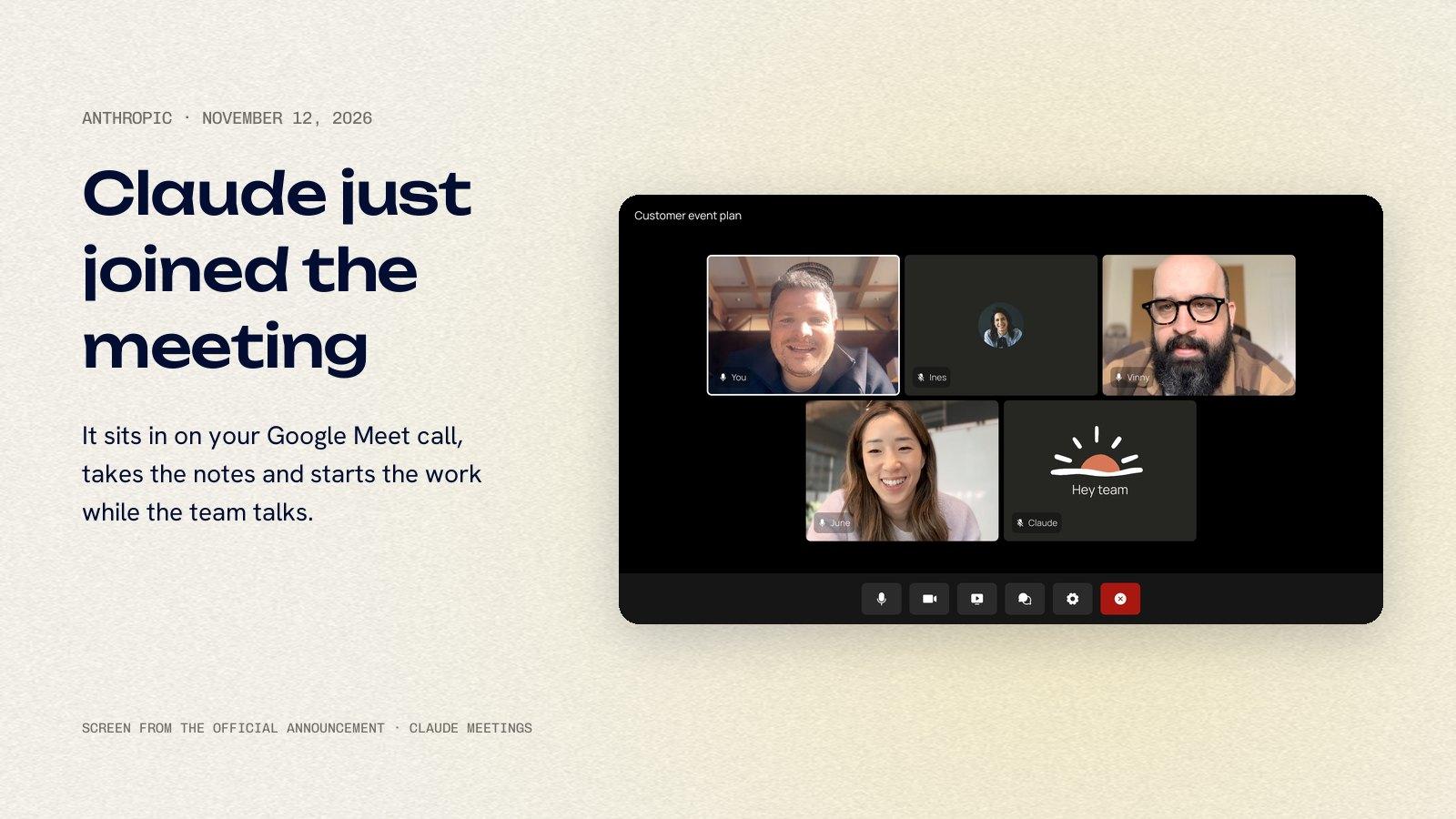
- On November 12, 2026, Anthropic launched Claude Meetings in beta, which brings Claude into Google Meet calls as a visible participant.
- During the meeting, Claude answers questions asked out loud or in the chat, writes the notes and action items, and builds docs and whiteboards that the team edits live.
- The beta is available on Claude's Team and Enterprise plans, and by default Claude stays out of calls with people from outside the organization.
- Claude saves a transcript, a summary and descriptions of the screen, not audio, and Anthropic asks that everyone on the call agree to be transcribed before the feature is turned on.
Every company has the meeting that ends without notes, the task nobody wrote down and the "who was supposed to send that?". On November 12, 2026, Anthropic launched Claude Meetings in beta: Claude joins your Google Meet call as a participant, follows the conversation and starts the work while the team is still talking.
What Claude does during the meeting
Claude shows up on the call as one more participant, with its own name and tile, and posts a notice in the chat. From there, it does four things:
- Answers questions. Anyone can ask out loud or in the call's chat. By default, it answers in writing.
- Writes the notes and action items. Summary, decisions, open questions and who owns what, without anyone stopping to take notes.
- Builds docs and whiteboards live. Someone says "Claude, start a doc for this plan" and it writes up what has been said so far, while the team edits alongside it.
- Looks things up in connected tools. With the permission of the person who asked, it pulls data from the tools connected to their account and brings it into the conversation.
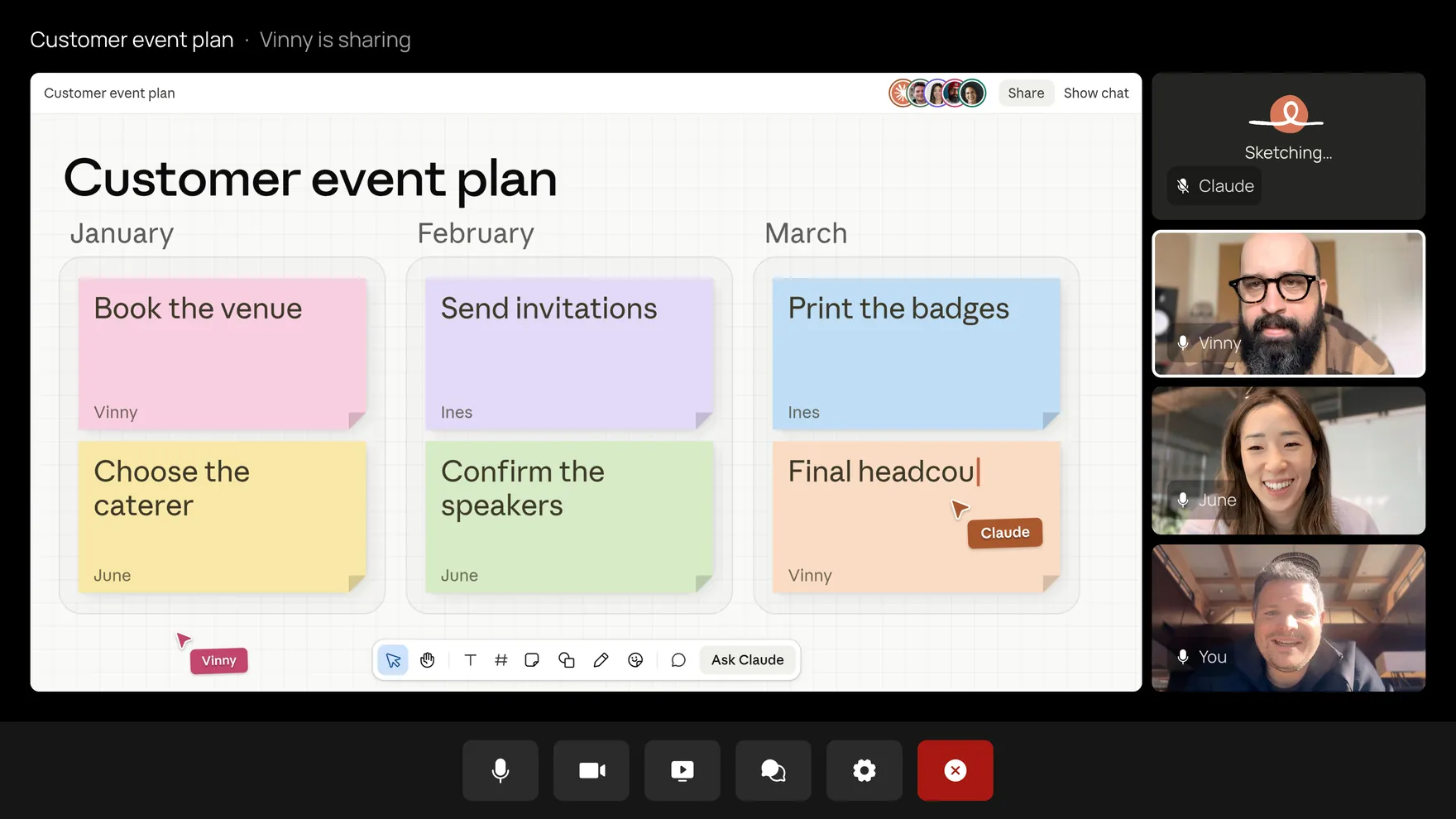
In Anthropic's example, a team is planning a customer event. When the budget comes up, someone asks what last year's event cost. Claude asks for approval to look it up, posts the answer in the chat and compares it with the current plan. When the talk moves to the schedule, it puts the timeline on a whiteboard.
What stays after the call ends
Each meeting gets its own page in claude.ai, with the notes, the transcript, the action items and everything Claude built. People from the organization who were on the invite can see the page and edit what Claude made.
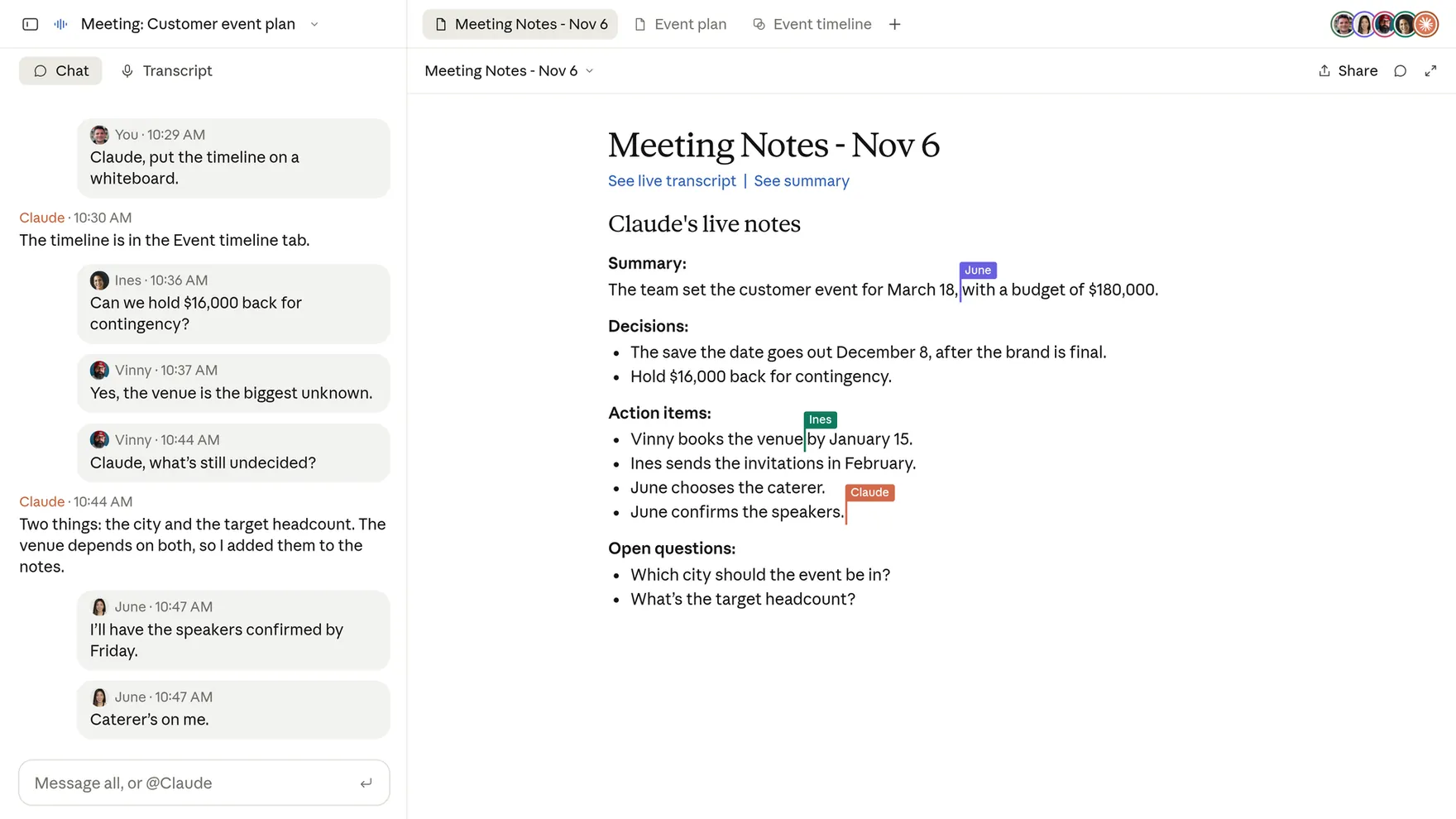
Later, you can go back and ask Claude about any meeting you were part of, or add it to the next one from your calendar. Anthropic says it is working with Gong, Granola, Fireflies.ai, Otter, Plaud and Attention so that transcripts can go to the tools teams already use.
Who can use it and what it costs
Claude Meetings is in beta on Claude's Team and Enterprise plans. For now, it only works in Google Meet. Other video conferencing platforms are promised, with no date.
- On Team, inviting Claude to meetings is on by default, and an admin can turn it off.
- On Enterprise, an admin turns it on for the whole organization or part of it.
- Not in the beta for now: organizations with zero data retention, a HIPAA-ready configuration or customer-managed encryption keys.
During the beta, Claude's notes, transcripts and answers on the call are not charged separately. The exception is an answer that uses a connected tool: that one counts toward the plan's usage. Docs and whiteboards made during a meeting are not charged through February 10, 2027.
Privacy: what to agree on before turning it on
This is where a company has to decide before people start using it. Anthropic set clear rules:
- Outsiders stay out, by default. Claude will not join a call with an outside guest and leaves if someone from outside joins partway through. Only an admin can allow it. When allowed, what the guest says goes into the notes and transcript.
- No audio is saved. Claude keeps a transcript, a summary and descriptions of what is on screen.
- Each person approves access to their own tools. Claude asks the first time, and the yes applies from then on.
- Answers in the chat are visible to the whole call. Everyone on the call sees what Claude posts there.
Anthropic itself advises making sure everyone on the call is fine with being transcribed before adding Claude or turning on auto-join. For anyone handling confidential client information, such as law firms and consultancies, this is the rule that matters most: letting Claude into client calls is a company decision, not an individual one.
What this changes in your company's routine
Meeting notes were always someone's job, and they almost always got pushed to later. With Claude on the call, the meeting ends with notes, action items and a first draft of the plan already done, in one place the whole team can reach.
A good meeting ends with the work started, not with a to-do list.
The risk is the same as with any new AI tool: each person turning it on their own way, with their own account, with no rule about what can be transcribed. It is unmanaged AI, now inside your meetings. Before turning it on, decide three things: which meetings Claude joins, who can allow it on client calls and which tools it can look things up in.
Technology isn't what's missing. Context is. That is Elev's work with Company AI: putting AI to work with your business's knowledge, with rules and with someone making sure it keeps working. If you want to organize how your team uses Claude, talk to Elev.
Sources
- Introducing Claude Meetings, Anthropic, November 12, 2026. The screens in this article come from the announcement.
- Introducing Claude Whiteboards, Claude Sheets, and Claude Data, Anthropic.
Frequently asked questions
Does Claude work in Google Meet?
Yes. Since November 12, 2026, Claude Meetings, in beta, lets you add Claude to a Google Meet call as a participant. Anthropic says support for other video conferencing platforms is coming soon.
Who can use Claude Meetings?
Organizations on Claude's Team and Enterprise plans. On Team, inviting Claude to meetings is on by default and an admin can turn it off. On Enterprise, an admin turns it on for all or part of the organization.
Does Claude Meetings record the meeting audio?
No. According to Anthropic, Claude saves the transcript, a summary and descriptions of what is on screen, not audio. It joins as a visible participant and posts a notice in the call's chat.
Will Claude join a call with an outside client?
Not by default. Claude stays out of calls with guests from outside the organization and leaves if someone from outside joins partway through. An admin can allow it, and in that case what the guest says is included in the notes and transcript.
How much does Claude Meetings cost?
During the beta, notes, transcripts and Claude's answers are not charged separately on Team and Enterprise, unless an answer uses a connected tool, which counts toward the plan's usage. Docs and whiteboards made during a call are not charged through February 10, 2027.
Get the next articles.
One email when a new article is out. No sales sequence, no made-up schedule.
Published on November 13, 2026